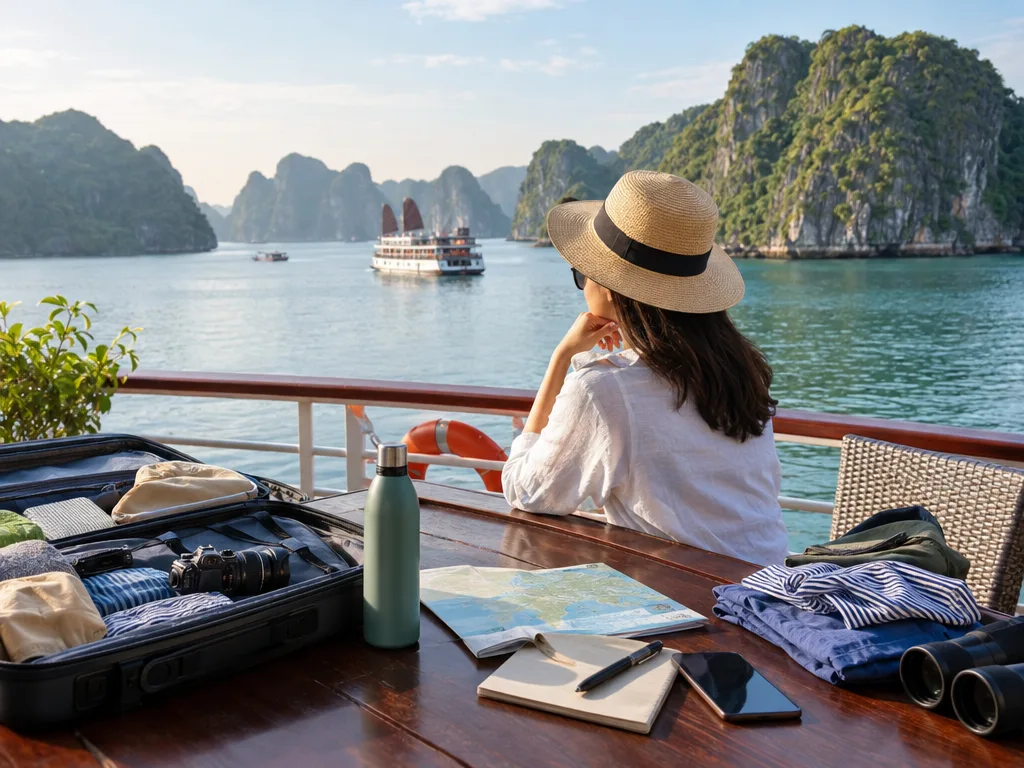
Bai Tu Long Bay is best experienced when the cruise matches the way you actually like to travel. Some travellers want quiet scenery and unhurried deck time; others care most about kayaking, cave visits, family-friendly pacing, or a comfortable cabin with as little packing stress as possible. A good preparation plan helps you compare those priorities before you book.
This Bai Tu Long Bay cruise packing and planning guide focuses on practical decisions: what to bring, what to confirm, how to read an itinerary, and how to prepare for changing conditions on the water. The goal is not to create a rigid checklist. It is to help you arrive ready for a scenic bay journey without carrying things you will not use.
Start with the kind of cruise day you want
Before thinking about clothes or accessories, picture the rhythm of your day. A Bai Tu Long Bay cruise normally combines time aboard the vessel with one or more shore or water-based activities. The balance matters more than the number of stops. An itinerary with many listed activities may feel busy, while a shorter list can leave more time for views, meals, reading, and rest.
Choose your priority
- Scenery and calm: look for a route that explains how much time is spent cruising through the bay rather than simply naming several attractions.
- Active exploration: check whether kayaking, swimming, walking, or small-boat excursions are included, optional, or weather-dependent.
- Comfort: compare cabin location, indoor and outdoor common areas, meal arrangements, and the amount of transfer time before and after the cruise.
- Family ease: confirm age guidance, life-jacket availability, cabin configuration, meal flexibility, and whether activities can be skipped without disrupting the day.
This simple priority check prevents a common mistake: choosing a cruise because the route sounds impressive, then discovering that its pace does not suit you. Bai Tu Long Bay is associated with the wider Ha Long Bay landscape of limestone formations, forested islets, and Gulf of Tonkin scenery, but every operator presents that landscape differently. Treat the itinerary as a description of your day, not just a list of place names.
Read a Bai Tu Long Bay itinerary line by line
A useful itinerary should tell you more than where the boat goes. Read it for sequence, effort, and flexibility. Look for the difference between time on the main vessel, time in a tender or day boat, and time walking on land. Those transitions affect comfort, especially if you are travelling with children, older relatives, or anyone who gets tired easily.
Questions to ask before booking
- Where does the cruise begin and end, and is the transfer from your accommodation included?
- How much time is allocated to boarding, meals, activities, and free time?
- Are excursions guided, self-directed, or offered only when conditions allow?
- Can you remain aboard while other guests join an activity?
- What happens if rain, wind, tides, or local operating decisions change the programme?
- Are port, visitor, transport, equipment, and service charges included in the quoted package?
A polished itinerary will usually explain the shape of the experience even when exact times change. Be cautious with descriptions that promise every activity without explaining alternatives. On the water, flexibility is part of responsible planning. The best question is not whether a cruise can guarantee every stop, but whether the operator explains how it manages changes.
Pack clothing for layers, movement, and moisture
Bay weather can feel different from the forecast you checked in the city. Wind on deck, spray during a transfer, strong sun, and cooler indoor air can all appear during one cruise day. Pack light layers rather than one heavy outfit. Choose clothes that are comfortable for sitting, climbing a few steps, walking on uneven surfaces, and moving between boat areas.
- Bring breathable tops and a light outer layer for breezy decks.
- Pack quick-drying shorts or trousers for water activities and a dry change of clothes.
- Include modest, comfortable clothing for shared indoor spaces and meals.
- Choose secure sandals or shoes with useful grip; avoid bringing several pairs of bulky footwear.
- Carry a light rain layer even when rain is not the centre of the forecast.
- Use a small day bag for excursions instead of taking your main luggage ashore.
Swimwear is useful only if your itinerary and conditions make swimming possible; it should not be your only activity clothing. A thin long-sleeved layer can be valuable for sun protection and comfort in wind. If you are sensitive to motion, avoid arriving in restrictive clothing and keep a simple change available after any boat or tender ride.
Protect yourself from sun, wind, and spray
Open water makes sun protection easy to underestimate. Pack sunscreen, sunglasses with a retaining strap, a hat that can be secured, and lip balm. Reapply sunscreen after swimming or heavy sweating. A lightweight scarf or buff can protect your neck without taking much space.
Keep electronics in a small waterproof pouch or a sealed dry bag. A phone may be safe in a cabin but vulnerable during boarding, kayaking, or a wet transfer. Bring a charging cable and, if useful, a compact power bank; store both where you can reach them without unpacking your luggage. Download important booking details before departure because mobile coverage and charging opportunities may vary.
Do not overpack expensive accessories. The landscape is the main attraction, and a simple camera or phone is easier to protect than a large collection of equipment. If you carry prescription medicine, keep it in your personal bag rather than checked luggage. Bring enough for the trip and a little contingency, while following the storage instructions for any medicine affected by heat or moisture.
Prepare for excursions without assuming they are guaranteed
Kayaking, small-boat trips, cave or grotto visits, village stops, and short walks can all change the way you experience the bay. Read the activity description for practical detail: how long it lasts, whether you board another craft, whether there are steps, and what equipment is supplied. A phrase such as “visit a cave” does not tell you how much walking is involved. Ask the operator when the description is unclear.
Match activities to your ability
You do not need to join every excursion. A good cruise should make it clear how guests can spend time aboard if they prefer not to participate. If you have limited mobility, recent injuries, a fear of deep water, or a child who needs regular breaks, ask about boarding points, ladders, wet surfaces, and the availability of assistance before paying.
For kayaking or swimming, follow the crew’s instructions and use the supplied safety equipment. Do not treat a calm-looking surface as a promise that conditions will remain unchanged. If the operator cancels or adapts an activity for safety, that is a normal part of responsible bay travel. Pack a dry bag, but do not assume personal equipment replaces the crew’s rules.
Plan meals, sleep, and personal comfort
Food is part of the cruise experience, so confirm what meals are included and how dietary requests are handled. Share allergies and strong intolerances when booking, then repeat them during check-in. Ask what alternatives are realistically available rather than assuming a generic “special diet” note covers every need.
For sleep, consider whether you are sensitive to engine noise, motion, or light. A small set of earplugs, an eye mask, and familiar medication-free comfort items can help. Keep the cabin organised with a soft day pouch, because repeatedly opening a large suitcase in a compact cabin quickly becomes inconvenient. If you are travelling as a couple or family, agree on where wet clothes, footwear, and chargers will go.
Bring reusable water storage if the operator permits it, but follow the vessel’s instructions about refilling and waste. Avoid single-use extras where practical. A cruise that operates in a sensitive coastal environment benefits from guests who carry less packaging, keep rubbish secure, and do not remove shells, plants, stones, or other natural material.
Make a booking checklist that compares the whole experience
Price alone rarely tells you whether a Bai Tu Long Bay cruise is good value. Compare the complete package and write down what is included. This makes it easier to distinguish a genuinely suitable itinerary from one that appears cheaper because important services are separate.
- Route description and likely activity mix
- Transfer arrangements and luggage handling
- Cabin category, bed arrangement, and location
- Meals, drinks, and dietary-request process
- Excursion equipment and guide support
- Visitor, port, transport, and service charges
- Weather-change, cancellation, and payment conditions
- Emergency contact and onboard communication arrangements
Save the final booking confirmation, operator contact details, and any written answers to your questions. Check the meeting point again shortly before departure, especially if your trip includes a hotel transfer. Keep your passport and essential documents accessible, and make sure the name on your booking matches the identification requirements supplied by the operator.
What not to pack for a bay cruise
Overpacking creates its own problems. Avoid large hard-sided luggage when a soft, manageable bag will work. Leave high-maintenance clothing, fragile ornaments, unnecessary formalwear, and duplicate toiletries at home. You are unlikely to need a full range of shoes, multiple thick jackets, or large quantities of snacks.
Do not pack items that could create a safety or environmental problem. Follow the operator’s restrictions on outside food, alcohol, heating devices, drones, and other equipment. Rules differ by vessel and itinerary, so confirm rather than relying on a generic packing list from another cruise. If an item matters to you, ask before departure.
A simple 24-hour preparation routine
The day before departure, check the weather for the departure area and review the operator’s latest instructions without assuming the forecast guarantees a particular programme. Put documents, medication, valuables, a light layer, sunscreen, and a change of clothes in your personal bag. Charge essential devices, download confirmations, and label luggage discreetly.
On boarding day, keep enough time for the transfer and check-in process. Eat and hydrate sensibly before setting out, especially if you are prone to motion discomfort. Tell the crew about mobility needs, allergies, or other practical concerns early. Once aboard, locate the main meeting point, ask where safety information is provided, and learn how to contact staff.
Final thoughts on preparing for Bai Tu Long Bay
The strongest Bai Tu Long Bay cruise plan is specific about your priorities but flexible about the details that nature and operations may change. Pack for layers, protect your phone and skin, read the excursion notes carefully, and compare inclusions before booking. Most importantly, choose an itinerary whose pace feels enjoyable rather than trying to collect every possible stop.
With a small, practical bag and a clear understanding of the day, you can spend less time solving avoidable problems and more time noticing the changing light, forested islands, and open-water scenery that make this part of northern Vietnam memorable.
JOIN THE CONVERSATION
Comments (0)
No comments yet. Be the first to share a thought.