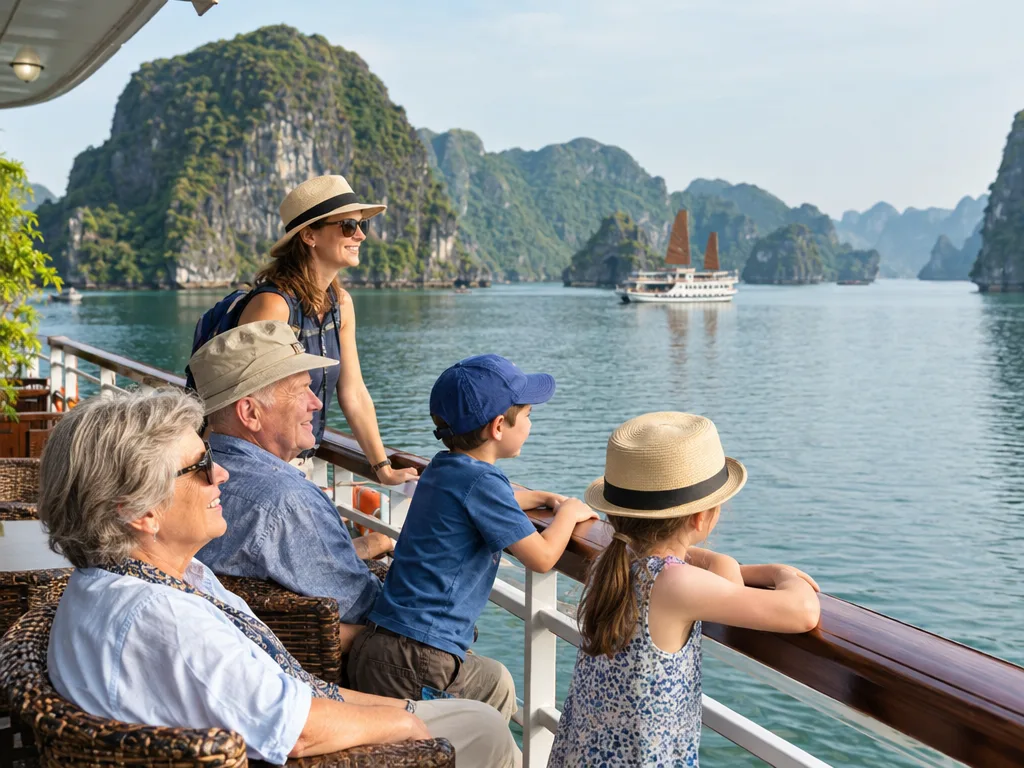
Ha Long Bay cruise activities are often presented as a single checklist: kayak, visit a cave, swim, join a cooking demonstration, and watch the sunset. That approach can leave older travellers, guests with limited mobility, or families travelling at different speeds with an exhausting day. A better plan is to choose excursions by access, effort, transfer time, and the quality of the scenery you want to enjoy.
This guide explains how to build a comfortable activity mix for a Ha Long Bay cruise without assuming that every guest wants to paddle, climb steps, or leave the ship at every stop. It also shows what to ask the operator before booking, how to prepare for changing conditions, and how to keep the itinerary flexible.
Start with the traveller, not the activity list
The right excursion depends less on what sounds famous and more on what your group can comfortably do. Before comparing cruise itineraries, discuss walking tolerance, balance, knee or hip concerns, swimming confidence, heat sensitivity, and whether anyone needs a handrail, a stable transfer, or extra time getting on and off a small boat.
Separate “can do” from “would enjoy”. Someone may be physically able to climb into a kayak but prefer a quiet viewpoint, while another guest may happily paddle but dislike a long transfer in a crowded tender. A useful planning conversation asks four questions:
- How much walking or standing feels comfortable in one outing?
- Are uneven paths, stairs, low ceilings, or wet surfaces a concern?
- Does the group prefer active time, cultural context, photography, or rest?
- Would one person staying aboard while others go ashore create a better day?
Keep the answers specific. “Easy activity” is not a universal standard, so ask the cruise line how long guests walk, what surfaces they use, how many steps are involved, and whether the ship can accommodate a guest who opts out at the last minute.
Compare activities by effort and access
Kayaking and rowing boats
Kayaking can be one of the most immersive Ha Long Bay cruise activities because it puts you close to the water and limestone scenery. It also requires a stable transfer from the cruise vessel to a smaller craft, the ability to sit low for a period of time, and enough balance to enter and exit safely. Some routes use kayaks; others offer a local rowing boat or a shared excursion, which may suit guests who want the scenery without paddling.
Ask whether guests step directly from a floating platform, whether crew provide physical assistance, whether life jackets are available in appropriate sizes, and what happens if wind or waves make the transfer uncomfortable. A calm-looking itinerary description does not answer those practical questions. If one traveller is unsure, choose a route with a non-paddling alternative rather than making kayaking the centre of the day.
Caves and grottoes
Cave visits can combine dramatic scenery with a relatively short shore excursion, but the access details vary. A cave may involve a tender transfer, a dock, stairs, uneven paving, narrow passages, or a return route that feels more demanding in humid weather. Ask for the number and shape of steps, the approximate walking time, the availability of rails, and whether guests can turn back before the main chamber.
For travellers who enjoy geology and photography but prefer less exertion, a scenic sailing past karst formations may be a better choice. The value of a cave stop is not only the entrance; it is the complete sequence from ship to shore and back again.
Swimming and beaches
Swimming stops are appealing in warm weather, yet they require more than confidence in the water. Check whether the stop is from a beach or a floating platform, whether the seabed is uneven, and whether guests must use a ladder. A guest who does not swim may still enjoy the stop if there is shade, a stable place to sit, and a clear return arrangement.
Walking, cycling, and village visits
Island or village excursions can add local context, but the physical demand is easy to underestimate. A route described as a “short walk” may include slopes, heat, loose surfaces, or a long wait for the group. Cycling may be optional on paper but feel like the main focus once ashore. Ask whether an electric vehicle, a shorter loop, or a seated alternative is available, and whether the guide can keep the pace together.
Choose a balanced activity mix for a one-night cruise
A one-night itinerary usually rewards restraint. Instead of selecting every possible excursion, choose one active experience and one low-effort scenic or onboard experience. For example, a morning cave visit can be paired with an afternoon of deck time, photography, or a short cooking demonstration. If kayaking is the priority, avoid adding a demanding walk and a late swimming stop on the same day.
Build recovery time into the schedule. Cruise activities are affected by embarkation, meals, transfers, weather, and group movement, so the published sequence may feel fuller than it looks. An itinerary with fewer stops can provide more real enjoyment than one that repeatedly moves guests between ship, tender, dock, and attraction.
- Choose one “must-do” activity for the group.
- Add one flexible option that can be skipped without disappointment.
- Protect a quiet period after lunch or after a shore transfer.
- Confirm the latest return time and what happens if a guest stays aboard.
- Leave room for scenery that is not listed as an excursion.
Make a two-night itinerary work harder
A two-night cruise can spread activities across more time, but the extra night should not become a reason to overbook every day. Use the middle day for the excursion that needs the most energy, then keep embarkation and disembarkation days lighter. This is especially helpful for multigenerational groups, because children may need play and downtime while older travellers may prefer a slower rhythm.
Ask whether the second day remains in the same area or moves to a different anchorage. A route with more time afloat may be ideal for guests who value scenery, conversation, and rest, while a route with several shore visits may suit travellers who want variety. Compare actual time ashore, not just the number of named attractions.
Plan for independent choices
The best family or group itinerary does not require everyone to do everything together. Before departure, agree on a simple rule: a guest may opt out without needing to justify the decision. Confirm whether the ship remains staffed and comfortable during excursions, whether meals are still available, and where a non-participant can wait. This turns a change of plan into a normal travel choice rather than a disruption.
Ask the cruise operator precise questions
Use the itinerary as a starting point, then request details in writing. Operators and travel advisers may use different meanings for “easy”, “short”, “optional”, or “suitable for all ages”. A clear question often produces more useful information than a general request for an accessible cruise.
- How do guests transfer from the cruise ship to the excursion boat?
- Are there stairs, ladders, narrow gangways, uneven paths, or low ceilings?
- How long are guests standing or walking, and are there places to sit?
- Can a guest remain onboard while a companion joins the excursion?
- Is the activity cancelled, shortened, or replaced in poor weather?
- What equipment is supplied, and may guests bring a personal aid?
- Are guides able to keep a slower group together?
- What is the procedure if someone feels unwell or wants to return early?
Also ask whether the activity is operated directly by the cruise or by a local partner. That distinction may affect group size, equipment, transfer procedures, and the ability to adjust the plan. Keep the answer with your booking documents so the onboard team can see the same expectations.
Prepare for weather and changing conditions
Bay conditions can change, and safety decisions may alter an excursion even when the original itinerary looked ideal. Treat the schedule as a plan rather than a guarantee. Before departure, check the cruise company’s weather policy and cancellation terms, then pack for both activity and non-activity time.
Useful basics include shoes with a secure grip, sun protection, a light layer, a dry bag or waterproof pouch, personal medication, and clothing that is comfortable when damp. Travellers who use walking aids should ask how the equipment is stored during transfers and whether crew can keep it dry. Do not assume that a phone, camera, or mobility aid will be protected simply because the excursion is short.
The official Cat Ba National Park site presents the area through ecotourism, conservation, and visitor-support information. That is a useful reminder to treat nature-based stops as managed environments: follow guide instructions, avoid touching wildlife, keep rubbish with you, and respect local communities and protected landscapes.
Match activities to common travel styles
For scenery and photography
Prioritise a route with generous time on deck, clear viewpoints, and fewer rushed transfers. A cave or short shore stop can add variety, but the cruise itself is the main experience. Ask which side of the vessel offers the best open views during the sailing sections, while remembering that the route and weather may change.
For active travellers
Choose kayaking, swimming, cycling, or a longer walk only after confirming transfer and recovery details. Pair demanding activities with a slower meal or scenic period. Bring a realistic sense of fitness: heat, humidity, wet surfaces, and unfamiliar equipment can make a familiar activity feel harder.
For families and mixed-age groups
Select activities with an easy opt-out. A shared rowing boat, a short cave visit, or a demonstration onboard may work better than an excursion where everyone must keep the same pace. Confirm life-jacket sizes, supervision arrangements, meal timing, and where children can rest between activities.
For travellers who want cultural context
Ask whether the excursion includes a local guide, community visit, craft demonstration, or explanation of fishing and conservation. Look for substance rather than the number of stops. A slower visit with time for questions can be more rewarding than a quick photo stop.
A final checklist before you book
Before paying a deposit, write down the three activities that matter most, the activities you would happily skip, and the physical limits that should shape the plan. Then compare cruise itineraries using the same questions: how much time is spent moving, how much time is spent enjoying the bay, what alternatives exist, and how clearly does the operator explain weather changes?
Choose the cruise whose activity design fits your group, not the one with the longest list. Ha Long Bay is experienced from the water as much as from its shore excursions. A comfortable deck, an unhurried meal, and a clear view can be the most memorable parts of the journey.
Conclusion
The best Ha Long Bay cruise activities are the ones that fit your energy, access needs, interests, and tolerance for change. Compare the full excursion sequence, ask precise transfer questions, keep one flexible option, and protect time to enjoy the landscape from the ship. With that approach, seniors, families, and mixed-ability groups can share a rewarding bay experience without turning the itinerary into a test of endurance.
JOIN THE CONVERSATION
Comments (0)
No comments yet. Be the first to share a thought.