A Ha Long Bay cruise is more than a scenic boat ride. The best itineraries balance time on the water with activities that let you see the karst landscape from different angles: paddling through a quiet lagoon, walking into a cave, visiting a floating community, or simply watching the bay change colour from the sun deck. The challenge is choosing excursions that suit your energy, interests, weather tolerance, and available time.
This guide explains the main Ha Long Bay cruise activities, how to compare them, and how to build a day that feels varied rather than rushed. It also shows where Lan Ha Bay and Bai Tu Long Bay may fit if you want a different pace.
Start with the kind of cruise day you want
Before choosing an excursion, decide what you want the day to feel like. A cruise can be active, cultural, scenic, or a blend of all three. This simple decision prevents a common mistake: booking a beautiful route whose activities do not match your group.
For scenery and a gentle pace
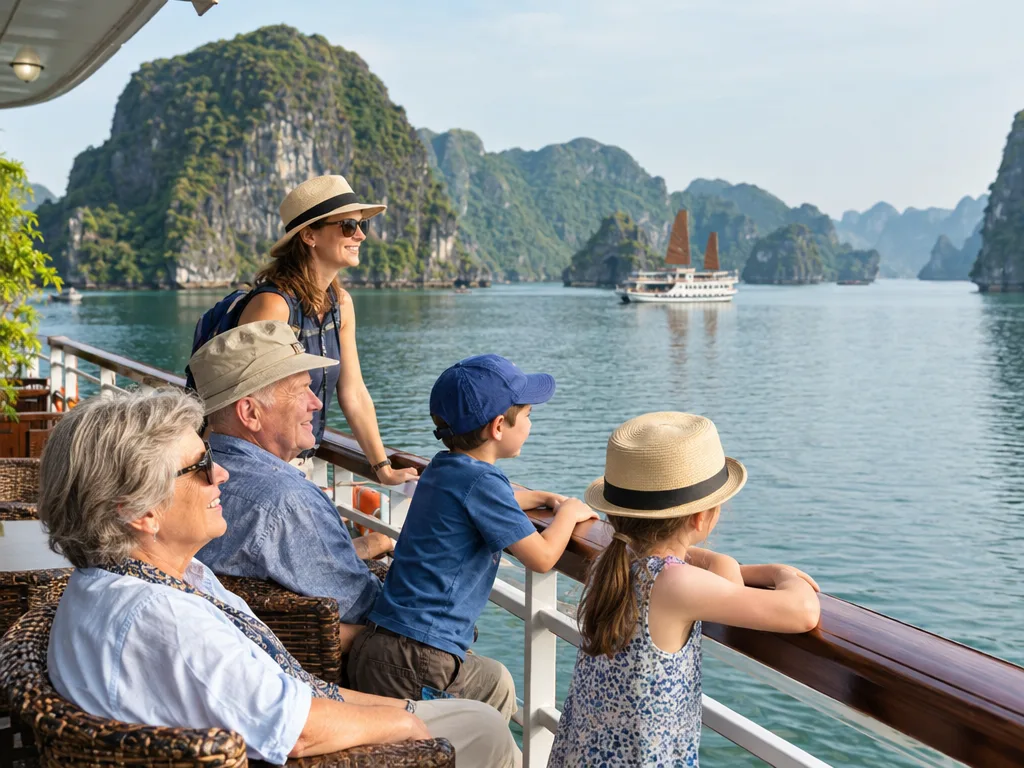
Choose a route with generous time on deck, a cave or viewpoint stop, and a calm meal break. The official Vietnam Tourism destination guide describes cruising among the bay’s islands and islets as the central experience, with cave visits and floating-village encounters adding depth to the seascape. This style suits first-time visitors, photographers, and travellers who would rather observe than race between stops.
For active exploration
Prioritise kayaking, a bamboo-boat outing, swimming when conditions allow, or a short walk with steps. Ask how long each activity lasts and whether the group returns to the main boat between stops. An itinerary can look adventurous on paper but feel tiring if every excursion involves transfers, stairs, or a tight schedule.
For families or mixed-ability groups
Look for optional participation. One person can kayak while another stays on the boat, and a cave visit can be replaced by a deck break if the route allows. For broader planning ideas, compare this guide with planning a bay cruise for families or a private group.
Kayaking and bamboo boats: choose the right kind of water time
Kayaking is one of the most memorable Ha Long Bay cruise activities because it changes your viewpoint. From a low seat on the water, the limestone walls feel closer, small openings become visible, and quiet corners are easier to appreciate. Vietnam Tourism highlights early paddles around floating villages and pearl farms, as well as late-afternoon outings in Lan Ha Bay lagoons, as ways to experience the bays beyond the main cruising view.
Kayaking is not automatically the best choice for everyone. It requires balance, some upper-body effort, and comfort with getting close to the water. Ask whether the excursion is guided, whether the route is sheltered, and whether tandem kayaks are available. The crew’s safety briefing matters more than the marketing label. Follow local instructions, wear the supplied flotation equipment, and keep personal items secured.
A bamboo boat, rowboat, or sampan-style outing offers a slower alternative. Someone else handles the boat while you focus on the cliffs, vegetation, and village scenery. It can be a better fit for older travellers, young children, or anyone who wants the atmosphere of a lagoon without paddling. The trade-off is less control over the route, so check whether the visit is a short scenic circuit or a longer stop.
For a detailed comparison of paddling, caves, and other stops, read Kayaking, Caves, and Stops: Comparing Cruise Excursions. The most useful question is not “Does the cruise include kayaking?” but “What kind of water experience will we actually have, and how much time will it receive?”
Caves and karst walks: what to check before you go
Cave visits add a geological and sensory dimension to a bay cruise. Outside, the landscape is defined by water, sky, and vertical cliffs; inside, the experience becomes cooler, darker, and more focused on textures and formations. The official Ha Long destination page notes that the bay’s karsts have been shaped by rain and water currents, and that caves range from large chambers to tighter passages.
Read the excursion description for the walking conditions rather than assuming every cave is easy. Look for mentions of stairs, uneven surfaces, low ceilings, or a route that requires steady footing. Comfortable shoes with grip are more useful than formal holiday footwear. Carry only what you need, because a bag becomes inconvenient on steps and in crowded passages.
A cave is usually best enjoyed slowly. Pause at the entrance to adjust to the light, keep your group together, and avoid judging the stop only by its most photographed chamber. Guides may point out formations, but the quality of the visit also depends on crowd levels, weather, and how long the itinerary allows you to stay.
If anyone in your party has knee, balance, or mobility concerns, ask the operator what the walking section involves before booking. A cruise with a scenic deck, optional cave stop, and flexible time may be more enjoyable than one built around a demanding shore activity.
Floating villages, pearl farms, and local life
A floating-village visit gives the bay a human dimension. The water is not only a backdrop for holiday photos; it has also supported fishing and maritime communities. Vietnam Tourism presents floating villages and pearl farms as possible points of interest, but the exact experience varies by route and operating conditions.
Expect an observational visit rather than a staged performance. Listen to the guide’s explanation, keep your voice low near homes or working areas, and follow photography instructions. If a stop includes a demonstration or small shop, treat it as part of the local economy rather than an obligation to buy.
Ask three practical questions before departure:
- Is the village visit made by the main cruise boat, a smaller transfer boat, or a bamboo boat?
- How long is the stop, and can guests remain on the main boat?
- Does the itinerary describe a community visit, a sightseeing loop, or a commercial demonstration?
These details help you match expectations. Travellers looking for quiet scenery may prefer a short village circuit; those interested in local livelihoods may want a route that explains how people use the water and nearby islands.
Swimming, beaches, and the limits of the weather
Some cruises include time for a swim or a beach landing, which can be a welcome change after sitting on deck. Treat these as weather-dependent activities rather than guaranteed highlights. Water conditions, visibility, wind, and the operator’s safety decision can alter the plan.
Bring a swimsuit, a light cover-up, and a small dry bag if swimming matters to you. Do not assume that every beach stop offers changing facilities. Ask where you can change, how you return to the boat, and whether the stop is a short dip or a longer break. If the sea is not suitable, a good cruise should still offer a satisfying alternative such as a cave, a village visit, or time on deck.
The official Vietnam Tourism guide describes Ha Long as subtropical, with hot, humid summers and cooler, drier winters, while its destination page points to clearer, calmer conditions in autumn and spring and a greater chance of storms in summer. Those broad patterns are useful for planning, but they are not a promise about a particular sailing day. Build your expectations around the whole itinerary, not one weather-sensitive activity.
Sunrise, sunset, cooking, and onboard activities
Not every memorable cruise activity happens ashore. Sunrise, sunset, photography, meals, and quiet time on the deck are part of the experience. A crowded list of excursions can leave little room to notice the changing light on the karsts, which is one reason many travellers choose an overnight sailing.
Onboard cooking demonstrations can be enjoyable when they are treated as a cultural introduction rather than a full cooking course. Ask whether guests actually prepare a dish or simply watch a short demonstration. The same principle applies to tai chi or stretching sessions: they are gentle ways to start the day, but participation may depend on weather and deck space.
Plan a small amount of unstructured time. Put the camera away for one section of the route, read the daily schedule, and choose a deck position with a clear view. If you are comparing one-day options, Making the Most of a One-Day Bay Cruise can help you judge how to protect time for the scenery instead of filling every minute with stops.
Compare Ha Long, Lan Ha, and Bai Tu Long activities
The three main cruising areas can offer similar activity labels but different moods. Ha Long Bay is the classic choice for dramatic karsts, cave visits, and a first introduction to the landscape. Lan Ha Bay is often associated with quieter lagoons, beaches, island scenery, and activity-focused routes around Cat Ba. Bai Tu Long Bay appeals to travellers who want a less familiar setting and more open-feeling views.
Use the route pages on this site to compare the context behind the activities: Lan Ha Bay Cruises for lagoon and island-oriented ideas, and Bai Tu Long Bay Cruises for a quieter alternative. The right choice depends less on which bay sounds most famous and more on how the itinerary allocates time.
Compare these points in writing:
- Number and type of shore or water excursions.
- Estimated walking, paddling, and transfer time.
- Whether activities are optional or expected of every guest.
- Backup plans if wind, rain, or sea conditions change.
- How much scenic cruising and personal time remains.
Also check the operator’s overall reputation and communication. The site’s checklist for comparing cruise operators is useful when two itineraries appear similar but differ in what they explain clearly.
How to pack for cruise excursions
Pack for movement, sun, spray, and changing temperatures rather than for a formal resort day. Lightweight clothing, secure sandals or walking shoes, sun protection, insect repellent, a refillable water bottle, and a compact rain layer cover most situations. A dry bag or waterproof phone pouch is useful for kayaking and boat transfers.
Keep valuables to a minimum on excursions. Bring any personal medication in a waterproof container and carry enough for the full sailing, including possible delays. A small towel can be useful, but check what the operator supplies. If you plan to swim, pack a change of clothes where you can reach it without opening your main luggage.
Most importantly, read the daily program each evening or morning. Meeting points, activity order, and weather-related changes can vary. Arrive early for transfers, listen to the crew, and tell them discreetly about mobility or health limitations that affect participation.
Build a balanced activity plan
The best Ha Long Bay cruise activities are not necessarily the ones with the longest list. A balanced plan might combine one active water outing, one cultural or geological stop, and generous time on deck. For an overnight cruise, add sunrise or sunset viewing and leave room for rest. For a day cruise, choose one or two priorities and accept that not every attraction will fit comfortably.
When comparing itineraries, value clarity over grand claims. A useful description tells you what you will do, how long it may take, what level of effort is involved, and what happens if conditions change. That information lets you choose confidently without treating the bay like a checklist.
Conclusion
Ha Long Bay is easiest to enjoy when the activities support the landscape rather than compete with it. Kayaking reveals quiet water, caves explain the karst setting, village visits add local context, and deck time gives the whole journey its sense of place. Match the route to your group, ask practical questions before booking, and keep your schedule flexible. Whether you choose Ha Long, Lan Ha, or Bai Tu Long Bay, the strongest cruise is the one that leaves you with enough time to look up from the itinerary and notice where you are.
JOIN THE CONVERSATION
Comments (0)
No comments yet. Be the first to share a thought.