Halong Bay cruise activities can turn a beautiful sailing trip into a genuinely memorable experience, but the most impressive itinerary is not necessarily the best one for every traveler. One cruise may focus on kayaking and caves, another on beaches and cycling, while a more relaxed boat may give you longer scenic time and fewer organized stops. The right choice depends on how active you want to be, how much time you have, and whether you prefer natural landmarks, local culture, food, photography, or quiet water.
This guide explains how to compare the main Halong Bay excursions before booking and how to make sensible choices once you are on board. It also looks at the differences between Ha Long Bay and Lan Ha Bay, what to ask about vague itinerary wording, and how to build a day that feels varied rather than rushed.
Start with the experience, not the attraction list
Many itineraries advertise a long list of activities. That can sound generous, but a list alone does not tell you how the day will feel. “Kayaking, cave visit, beach, cooking class and sunset party” may mean several enjoyable experiences, or it may mean short transfers between crowded stops with little time to settle into any of them.
Before comparing boats, decide which of these priorities matters most:
- Active exploration: kayaking, swimming, hiking, cycling, or rowing through sheltered water.
- Scenic discovery: viewpoints, karst landscapes, sunrise, photography, and time on deck.
- Cultural interest: fishing-village stories, regional food, cooking demonstrations, or historic sites.
- Comfort and flexibility: fewer scheduled stops, longer meals, and optional activities.
- Family suitability: simple logistics, manageable walking, supervised water activities, and downtime.
A practical way to compare excursions is to ask what proportion of the day is spent moving, waiting, walking, or actually doing the activity. The most useful itinerary is usually balanced: one substantial excursion, one shorter experience, and enough open time to enjoy the bay from the boat.
Kayaking, rowing, and water-based activities
Kayaking is often the signature Halong Bay excursion because it changes your viewpoint. From a small boat, cliffs feel closer, quiet coves become easier to appreciate, and you can notice details that disappear from a large vessel. The experience is usually best in sheltered water, where the goal is observation rather than speed.
Ask these questions before booking:
- Is kayaking included or an optional paid add-on?
- How long is the actual paddling time?
- Do guests paddle independently, or is the excursion guided?
- Are life jackets supplied and are tandem kayaks available?
- What happens if weather or sea conditions make kayaking unsuitable?
Rowing boats can be a good alternative for travelers who want a calmer activity or prefer not to paddle. They also make it easier to look around, take photographs, and listen to a local guide. The trade-off is less independence and a stronger dependence on the group’s pace.
Water activities are not automatically suitable for everyone. Guests should be comfortable getting in and out of a low boat, following crew instructions, and keeping personal belongings secure. Wear quick-drying clothing, use a waterproof phone pouch, and avoid carrying anything you would be upset to lose. If you are traveling with children, confirm age guidance and whether an adult must share the kayak.
For a closer comparison of route design and stop selection, read Kayaking, Caves, and Stops: Comparing Cruise Excursions. It complements this guide by focusing on how excursion packages differ rather than treating every activity as interchangeable.
Caves, grottoes, and viewpoint walks
Cave visits are among the most recognizable Halong Bay excursions, but they vary considerably. Some involve a paved or stepped route through a developed cavern with lighting and interpretation. Others are shorter visits by tender boat or a stop near a rock formation. The name of the cave matters less than the access details and the amount of time allocated.
When reading an itinerary, look for practical information: number of steps, walking duration, surface conditions, heat, lighting, and whether the route returns by the same path. A cave may be visually spectacular but unsuitable for travelers who have difficulty with stairs or crowded enclosed spaces. Good cruise operators explain alternatives rather than treating participation as mandatory.
Viewpoint walks offer a different reward. A climb can provide a broad perspective over limestone islands, but the climb may be steep, hot, or slippery after rain. Bring water, footwear with grip, and a lightweight layer for the return boat. The best viewpoint is not always the highest one; a shorter path with time to enjoy the landscape can be more satisfying than a rushed summit.
Photography also benefits from patience. Early or late light often gives the karst silhouettes more definition, while midday haze can flatten the scene. If photography is a priority, ask whether the boat’s schedule allows time on deck after excursions rather than filling every hour with organized activities.
Beaches, swimming, and slow time on the water
Swimming stops appeal to travelers who want a break from sightseeing, especially on warm days. Yet a beach stop is not the same as a guaranteed swimming session. Conditions, tides, weather, water quality, and local operating rules can affect whether guests enter the water. Treat swimming as an opportunity, not the single reason to choose an itinerary.
Check whether the boat provides a tender transfer, changing facilities, towels, and a clear return time. A beach may be small, and the experience can feel crowded if several boats arrive together. If you prefer quiet, compare the timing and route rather than relying on promotional photographs.
Slow time is an activity in its own right. A cruise with a comfortable sun deck, shaded seating, and uninterrupted views may suit you better than one with the largest excursion list. Leave room for coffee at sunrise, a quiet reading hour, or an evening view of the karst formations. These pauses are especially valuable on an overnight cruise, when the boat itself is part of the destination.
Travelers deciding between a short sailing and an overnight schedule can use Day Cruises and Overnight Cruises as starting points. The category pages help separate time constraints from activity preferences before you compare individual itineraries.
Food, cooking, and cultural activities
Cooking demonstrations are a common cruise activity, often built around familiar Vietnamese dishes or simple preparation techniques. Their value depends on how interactive they are. A demonstration watched from a distance is different from a small class where guests prepare ingredients, ask questions, and taste the result.
Ask what dish is covered, whether dietary requirements can be accommodated, and whether the class is scheduled during a scenic period. If you have a serious allergy, communicate it before departure and repeat it to the onboard team. Do not assume that a general “vegetarian option” covers every ingredient or cross-contact concern.
Food activities can also be a useful window into the region. Look for explanations of ingredients, fishing traditions, or the connection between coastal communities and the bay. Even a short market-style presentation becomes more meaningful when it explains why a dish is prepared in a particular way.
Cultural stops should be assessed with the same care. A fishing village, floating community, temple, or historic site may be interesting, but the visit should be described accurately. Ask whether it is a genuine shore visit, a boat pass-by, or a staged demonstration. Responsible travel means following local instructions, not entering private areas, and asking before photographing residents.
Choosing between Ha Long Bay, Lan Ha Bay, and Bai Tu Long Bay activities
The bay areas share dramatic limestone scenery, but cruise routes can feel different. Ha Long Bay is the best-known name and may suit first-time visitors who want classic landmarks and a broad selection of boat styles. Lan Ha Bay is often considered when travelers want an itinerary connected with Cat Ba Island, additional cycling or island options, or a different pattern of smaller coves.
Bai Tu Long Bay appeals to travelers comparing quieter routes and a less concentrated sightseeing rhythm. The important point is not to choose a bay solely because one label sounds more peaceful. Ask for the actual route, excursion stops, tender transfers, and time spent sailing. A quiet route can still have a tightly scheduled programme, while a busier area can feel relaxed on a well-timed itinerary.
For route-focused planning, compare Ha Long Bay Cruises, Lan Ha Bay Cruises, and Bai Tu Long Bay Cruises. You can also read Lan Ha Bay by Boat: What to Look for in an Itinerary when cycling, island access, and the balance between sailing and shore time are important.
How to match activities to different travelers
For active travelers
Choose an itinerary with meaningful paddling time, a walk or cycle, and an optional swim. Confirm the order of activities so you know whether the most demanding excursion happens in the morning or after a long transfer. Bring sun protection and plan for wet clothing.
For families
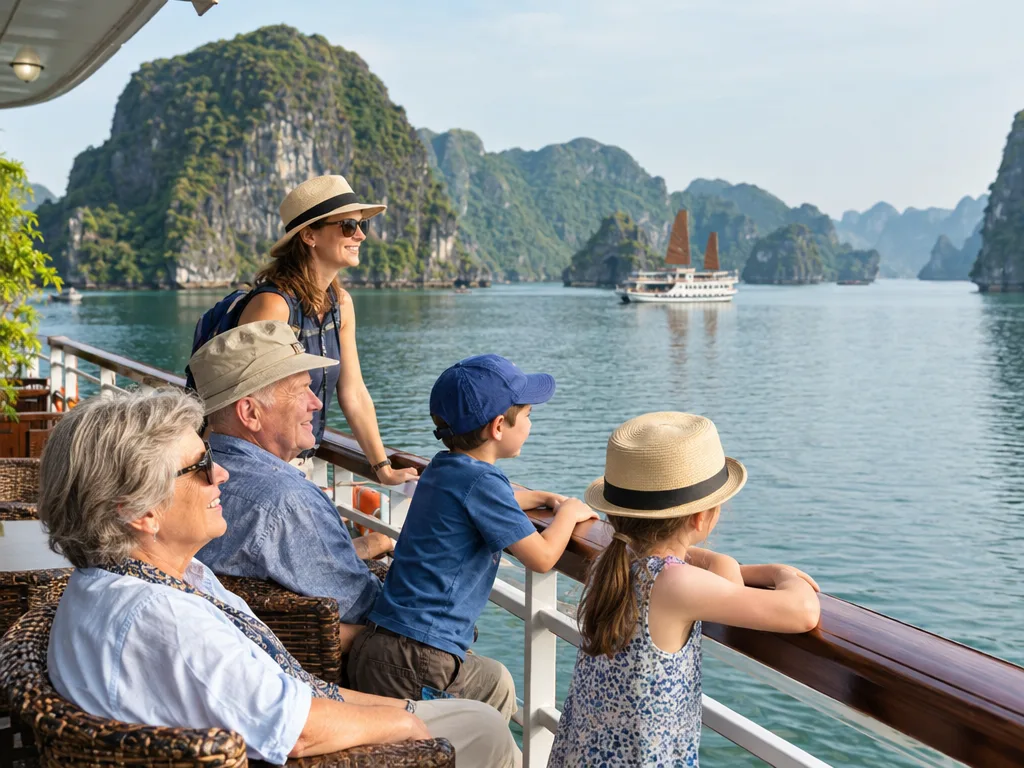
Prioritize simple transfers, flexible meal times, and activities with clear safety guidance. A shorter kayak or rowing trip may work better than several long stops. Leave enough downtime for children to rest, and ask whether the boat has indoor space if weather changes.
For older travelers or mixed-ability groups
Look beyond the attraction names. Check stairs, tender boarding, walking surfaces, toilets, shade, and the availability of alternatives. A private or smaller-group arrangement may make the pace easier to manage. The article Planning a Bay Cruise for Families or a Private Group offers additional questions for coordinating different needs.
For photographers and quiet travelers
Choose a boat that protects deck time and does not promise an exhausting number of stops. Look for a route with sunrise or sunset opportunities, a comfortable viewing area, and realistic transfer times. Fewer well-spaced activities often produce better photographs and a calmer trip.
Questions to ask before you book
Use this checklist when comparing cruise pages or speaking with an operator:
- Which activities are included in the published fare?
- Which stops are conditional on weather, tides, or local operations?
- How long is the active portion of each excursion?
- Are transfers by tender, bus, bicycle, kayak, or on foot?
- What equipment is supplied, and what should guests bring?
- Are there alternatives for guests who do not swim, climb, or kayak?
- How large are the excursion groups?
- Is the route likely to overlap with other boats at popular stops?
- Can dietary, mobility, or family needs be discussed before departure?
For a wider booking framework, see A Clear Checklist for Comparing Cruise Operators. Activity quality depends not only on the destination but also on communication, crew organization, and how honestly the operator describes the schedule.
Final advice for building a better excursion day
The best Halong Bay cruise activities create contrast: active time balanced with scenery, a structured visit balanced with freedom, and a memorable landmark balanced with the simple pleasure of sailing. Select one or two experiences that genuinely match your interests instead of chasing every advertised stop. Confirm the practical details, keep an open mind about weather-related changes, and leave enough space to enjoy the bay itself.
When an itinerary is clear about timing, access, equipment, alternatives, and local etiquette, you can make a confident choice. That is more useful than a long list of attractions—and far more likely to produce a cruise you remember for the right reasons.
JOIN THE CONVERSATION
Comments (0)
No comments yet. Be the first to share a thought.