A day cruise in Ha Long Bay can combine a road transfer, several hours on the water, a meal, and one or more shore activities. Packing well is less about bringing a large bag and more about keeping the essentials accessible. The right day bag helps you stay comfortable in changing weather, move safely on wet surfaces, and enjoy the itinerary without carrying unnecessary items.
Start with the itinerary, not the suitcase
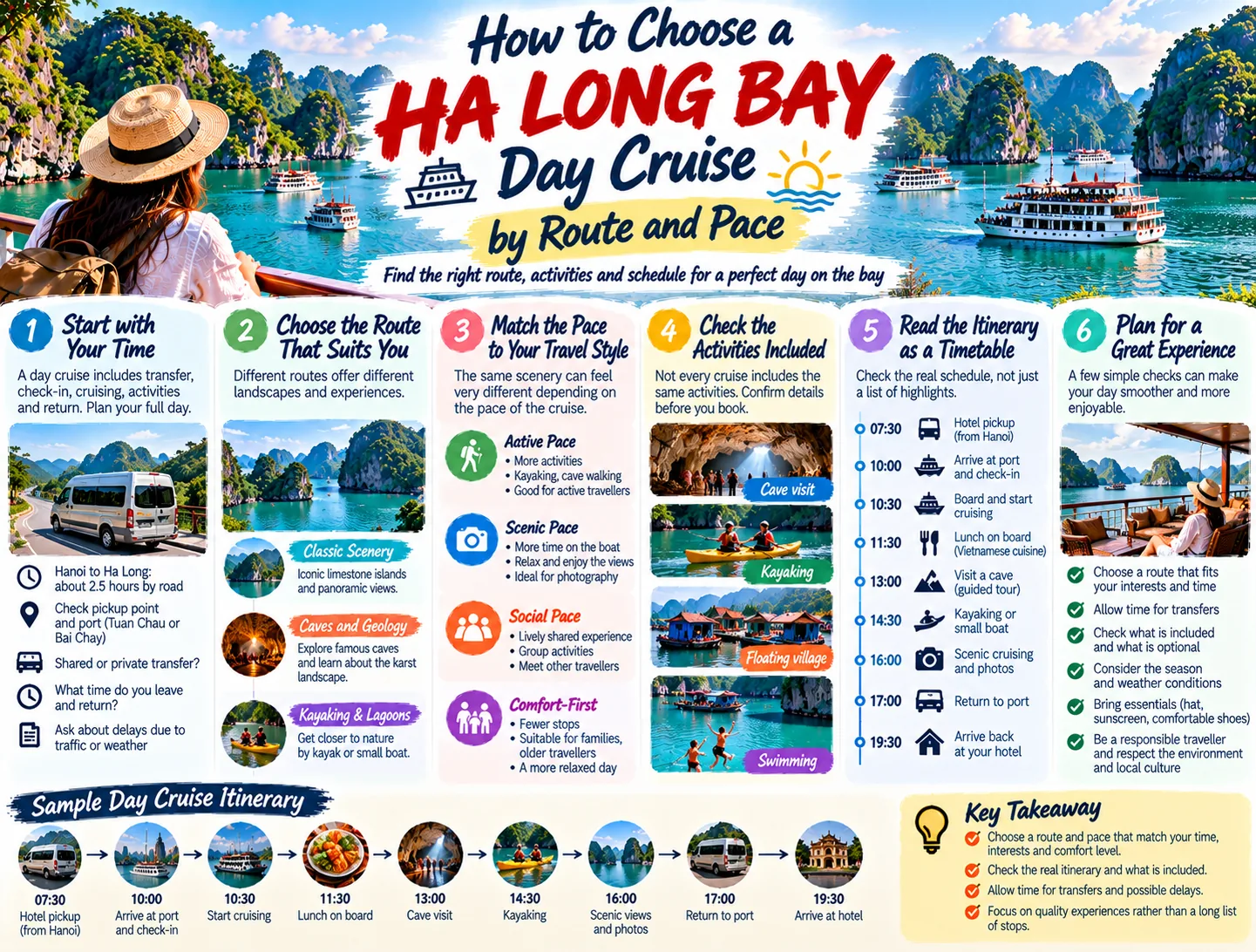
Before packing, read the operator’s full schedule and identify the embarkation point, transfer arrangement, expected time afloat, and activities included. A sightseeing-focused sailing may need little more than sun protection and a light layer. A programme that includes kayaking, a cave visit, swimming, or a village stop needs footwear and clothing that can handle water, steps, and changing conditions.
Also check what the cruise supplies. Meals, drinking water, towels, life jackets, and activity equipment may be included, but policies differ. Confirm the details before departure rather than packing bulky items “just in case.” The official Vietnam Tourism website places Quang Ninh within northern Vietnam and presents travel planning by region, season, and interest; use those broad planning cues alongside the specific operator itinerary.
The essential Ha Long Bay day cruise packing list
- Passport or accepted identification: Carry the document requested by your operator and keep it dry and secure.
- Booking details: Save the confirmation, pickup information, emergency contact, and meeting point offline on your phone.
- Phone and power bank: A charged phone is useful for transport coordination, photos, and accessing booking information. Keep electronics in a waterproof pouch.
- Small day bag: Choose a compact bag that closes securely and is comfortable when walking between the vehicle, pier, and boat.
- Sun protection: Bring sunscreen, sunglasses, and a hat with a secure fit. Open decks can feel bright and exposed even when the air is cool.
- Light rain layer: A thin waterproof jacket or poncho is more useful than a heavy coat when showers are possible.
- Refillable water bottle: Use one if the operator permits it and follow the cruise’s waste and refill guidance.
- Comfortable walking shoes: Wear shoes with a reliable grip for piers, decks, steps, and uneven paths.
- Light, breathable clothing: Choose clothes that work for warm cabin areas and breezier outdoor decks. Pack one extra top if water activities are possible.
- Personal medication: Keep regular medicine in your hand luggage, with a little extra for delays. If you are prone to motion sickness, bring the product you normally use and follow its instructions.
What to pack for kayaking, swimming, or wet activities
If the itinerary includes kayaking or swimming, pack swimwear and a quick-drying change of clothes in a separate waterproof pouch. A small towel may be useful if the operator does not confirm that towels are supplied. Bring a simple dry bag or sealed pouch for a phone, wallet, glasses, and medication. Avoid loose jewellery and anything that cannot tolerate splashes.
Water activities can involve boarding a small craft, stepping onto a floating platform, or moving over a wet deck. Secure sandals may work for some travellers, but shoes with a firm sole are usually more practical for mixed land-and-boat conditions. Follow the crew’s instructions about life jackets and where personal belongings should be stored.
Clothing for caves, viewpoints, and uneven paths
Some day-cruise itineraries include stairs, low ceilings, narrow paths, or viewpoints reached on foot. Wear clothing that allows easy movement and shoes that will not slide. A light layer is useful in shaded areas and on breezy decks. If you plan to take photographs, keep straps short and avoid carrying a large camera bag on a crowded transfer or excursion.
Food, money, and practical comfort
Ask what meals and drinks are included before bringing snacks. A small snack can be sensible for travellers with dietary needs or a long transfer, but keep food sealed and follow the operator’s rules. Tell the cruise in advance about allergies, vegetarian requirements, or other meal needs; do not assume the onboard kitchen can accommodate a request made at the last minute.
Carry a small amount of local cash only if you expect optional purchases or tips, and keep cards and cash in a waterproof wallet. Wet wipes, tissues, hand sanitiser, and a few small rubbish bags can make a full day easier without taking much space.
What not to overpack
Leave large suitcases, valuable jewellery, unnecessary electronics, and duplicate toiletries at your accommodation where possible. A day cruise is easier when you can keep one small bag with you. Do not pack equipment that the cruise confirms it will provide, and do not bring items that may create a safety problem on a kayak or narrow walkway.
Boarding-day checklist
- Check the pickup time, meeting point, and the name of the transport provider.
- Confirm the pier or embarkation location and allow a buffer for traffic.
- Charge your phone and power bank; download booking details for offline access.
- Put identification, medicine, water, sun protection, and rain protection in the day bag.
- Wear secure footwear and clothing suitable for both deck time and shore activities.
- Tell the crew about allergies, mobility needs, or motion-sickness concerns early.
- Keep valuables dry and follow instructions about life jackets, boarding, and activity equipment.
Final packing rule
Pack for the actual itinerary and the weather you may encounter, not for every possible holiday scenario. The best Ha Long Bay day cruise packing list is compact: identification, booking information, sun and rain protection, secure shoes, a dry layer, personal medication, and a waterproof way to protect your phone and valuables. Confirm the operator’s latest instructions before leaving, because pickup arrangements, included equipment, and activity plans can change.
JOIN THE CONVERSATION
Comments (0)
No comments yet. Be the first to share a thought.