A Vietnam bay cruise can look perfect in a brochure and still disappoint if the booking terms are vague. Weather changes, port instructions, route substitutions, delayed transfers, and cabin or meal exclusions can affect the trip more than a glossy photograph. The safest way to review a cruise is to treat the itinerary, disruption policy, and total cost as one decision.
Start with the exact sailing you are buying
Do not review a cruise only by its boat name or headline route. Confirm the sailing date, departure port, return point, cruise length, and whether the itinerary is described as a fixed route or a sample programme. A one-night sailing and a two-night sailing may use the same vessel but offer very different time on the water and excursion schedules.
Ask the operator to identify what is guaranteed and what may change. Useful wording includes: Which port will we use? Which activities are included on this departure? What happens if the planned route is changed? Is the quoted cabin category guaranteed, or can guests be moved to an equivalent room?
Read the weather and safety wording carefully
Bay cruises operate under local maritime and port controls. An operator may need to delay departure, shorten a route, cancel an overnight stay, or replace an excursion when conditions are unsuitable. A responsible review therefore looks for a clear explanation of who makes the decision, how guests are notified, and what happens to unused cruise services.
Do not assume that “weather permitting” means a full refund. Check whether the policy distinguishes between a port closure, a route change, a late transfer, and a guest choosing not to travel. Also check the deadline for notification and whether the remedy is a refund, a date change, a credit, a shortened programme, or another service. Policies can differ by operator and sailing, so use the written terms for your specific booking rather than a general promise from a salesperson.
Compare cancellation terms before comparing cabin photos
Cancellation rules should be easy to find before payment. Look for the date on which each penalty applies, whether deposits are refundable, and how amendments are handled. If a booking is made through an agency, confirm which company controls the cancellation and whether agency fees are separate from the cruise operator’s charges.
Ask what happens if the operator cancels. The answer should explain the available remedy and the treatment of prepaid extras such as transfers, private vehicles, upgraded cabins, or shore arrangements. Keep confirmation emails, receipts, and the final itinerary together. If the terms are revised, request the revised version in writing.
Check the transfer promise as part of the cruise
A cruise review is incomplete if it ignores the journey to and from the port. Compare the pickup area, meeting instructions, vehicle type, estimated transfer duration, luggage handling, and the latest time guests must arrive. If transfers are optional, add them to the real trip cost before judging value.
Ask whether a delayed flight, hotel change, or missed pickup is covered. Many transfer problems are not cruise problems at all, so the booking should state who to contact and what assistance is available. Leave sensible time between an independent arrival and embarkation; do not rely on an unconfirmed connection immediately before departure.
Audit what the fare includes
Build a simple checklist with the cabin, meals, drinking water, activities, port fees, transfers, taxes, and any service charges. Then mark each item as included, optional, or unclear. “Full board” does not necessarily answer every question about drinks, special meals, or dining times. “Activities included” may still require booking, equipment, or a level of fitness that does not suit every traveller.
Look at the practical cabin details: bed configuration, private bathroom, window or balcony, air-conditioning, storage, noise exposure, and access by stairs. A lower price is not good value if the room does not meet your needs or if essential transport is added later.
Match route and pace to the trip you want
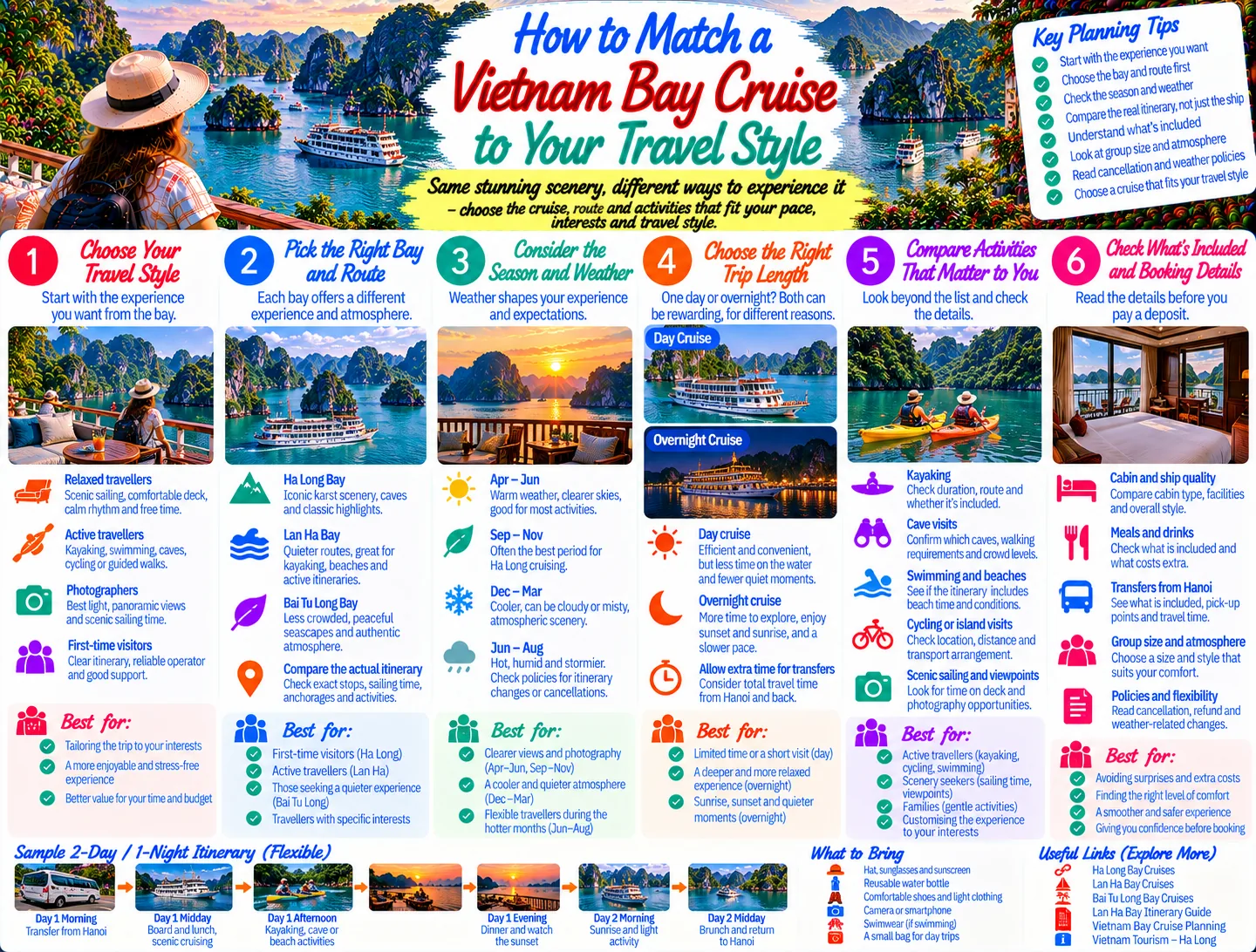
Compare how much of the schedule is spent transferring, waiting, dining, sailing, and visiting shore sites. A busy itinerary may suit travellers who want activities, while a slower programme may be better for scenery and rest. Check the walking distance, boat transfers, ladders, tender boarding, and time available at each stop.
For a wider route comparison, see our guide on how to choose the right Vietnam bay cruise itinerary. The aim is not to find a universally best route, but one whose duration, activities, transfer demands, and backup options fit your schedule.
Use reviews as evidence, not as a verdict
Read recent reviews for repeated patterns rather than isolated complaints. Separate comments about the boat from comments about weather, transfer delays, or expectations that were never promised. Look for specific observations about cleanliness, communication, food handling, cabin condition, activity organisation, and how staff responded when plans changed.
Then compare those observations with the operator’s current written description. Photos and reviews can age faster than booking pages, so ask for clarification when the two disagree. Our broader guide explains how to review a Vietnam bay cruise before booking using a fuller checklist.
A final pre-payment checklist
- Confirm the exact route, port, dates, cabin category, and passenger names.
- Save the current inclusions and cancellation terms.
- Ask how weather or port decisions affect the programme and payment.
- Add transfers, drinks, optional activities, and other extras to the total.
- Check accessibility, meal needs, medical concerns, and activity effort.
- Keep a written emergency contact and the latest meeting instructions.
A strong Vietnam bay cruise review does not promise that plans can never change. It shows whether the operator explains change clearly, protects essential safety decisions, and gives you enough information to choose with realistic expectations.
JOIN THE CONVERSATION
Comments (0)
No comments yet. Be the first to share a thought.